.png)
.png)
Funeral Service, Memorial Service, or Celebration of Life? A Complete Guide to Understanding the Differences

Published on TributeSlideshow.com | Category: Death Care & Memorial Planning
When a loved one passes, families face an immediate and emotionally charged question: How do we say goodbye in a way that truly honors them? The answer often leads to another question most of us have never had to think about before: What's the difference between a funeral service, a memorial service, and a celebration of life?
These terms are frequently used interchangeably, but they carry meaningful distinctions in timing, tone, structure, and purpose. Understanding those differences can help you make a decision that feels right for your family and reflects who your loved one truly was.
This guide breaks down all three service types, compares them side by side, and includes a special section on how the choice of service affects your memorial video the length, music, tone, and what you'll want to include.
The Big Picture: What All Three Have in Common
Before diving into the differences, it's worth acknowledging what unites all three:
Every end-of-life gathering — whether a formal funeral, a quiet memorial, or an upbeat celebration of life — serves three core purposes:
Acknowledging the loss within a community
Supporting the grieving family by surrounding them with people who care
Celebrating a life full of memories, relationships, and meaning
As Westchester Funeral Home notes, these gatherings differ in execution, but each is a ceremony — a gathering of people who share a common loss. It's just that one is more rooted in tradition, while the other is the result of recent changes in social values.
With that shared foundation in mind, here's how they diverge.

1. Funeral Service: The Traditional Farewell
A funeral service is what most people picture when they hear the word "funeral." It is the most structured and formal of the three, rooted in long-established cultural and religious customs.
Key characteristics:
The body is present. This is the defining feature of a funeral. A funeral service is a structured ceremony held to honor, remember, and say goodbye to a deceased person, usually while their body is present.
Timing is immediate. A funeral service will happen soon after the person passes away, generally within one week.
It follows a set order. Traditional funerals include a visitation, a ceremony, and typically a procession to the cemetery or crematory.
Often faith-based. Traditional funerals are based on long-established cultural and religious traditions. They are generally solemn and dignified events led by a funeral director or member of the clergy.
Attire is often formal and dark. Black, navy, or other muted tones are expected.
A funeral provides immediate closure for those in shock. Its structure can be deeply grounding during a chaotic time, offering a familiar framework when nothing feels familiar.
What a funeral is not: Funerals are not casual. They are not as flexible in timing. And they almost always involve the physical remains of the deceased.
2. Memorial Service: A Meaningful Middle Ground
A memorial service shares much of the reverence and structure of a funeral — but with one important distinction: the body is not present in a casket at a memorial service. However, an urn with the loved one's ashes may be present.
This distinction opens the door to more flexibility in almost every other dimension.
Key characteristics:
Timing is flexible. A memorial service doesn't have a specific timeline since the body doesn't have to be involved. This allows memorial services to be held a few weeks, and even months after the person has passed away. This is especially helpful when family members need time to travel or when families simply need more time to plan.
Location can vary. Memorial services take place in funeral homes, places of worship, private venues, or even at home, wherever the family feels most comfortable.
Still structured and reverent. Memorial services can still be deeply traditional or faith-based, the key difference is timing and the absence of the physical remains, sometimes a cremation urn is part of the service.
More participatory. Unlike a traditional funeral where guests primarily observe, memorial services often allow for each guest to participate to some level.
Elements are similar to a funeral: Music, readings, eulogies, floral arrangements, and a reception are all common components.
Think of a memorial service as a gentle mix of a traditional funeral and a celebration of life with some structure, but flexibility to make the ceremony unique and personalized to fit the individual being honored.
3. Celebration of Life: Honor Through Joy
The celebration of life is the newest and fastest-growing format for end-of-life gatherings. Rather than centering grief, it centers gratitude for a person's passions, humor, relationships, and the mark they left on the world.
Key characteristics:
No body required, no timeline required. Celebrations of life can happen weeks, months, or even a year after passing. Many families use the time to plan something truly meaningful.
The tone is uplifting. The focus of a celebration of life is often on happy memories, life accomplishments, and the impact the loved one had during their well-lived life — distinct from the tone of a funeral, which many think of as having a sad tone and a focus on loss.
Location is personal. They can be held anywhere that holds significant meaning for the departed — such as a park, beach, or a place dear to their heart.
Dress code reflects personality. Attire for a celebration of life may range from casual to formal, but rarely adheres to the traditional black clothing found at funerals. Bright colors, favorite sports jerseys, or themed clothing are common.
Highly personalized. Food, music, interactive activities, photo displays, and storytelling are all fair game.
Growing in popularity. Especially post-pandemic, more and more families are placing value on uplifting ceremonies that bring friends and family together to share stories and reminisce with favorite foods and décor.
The celebration of life gives families the freedom to honor someone the way that person would have actually wanted to be remembered, not through ritual obligation, but through genuine reflection and joy.
A Quick Event Comparison: Helping You Select the Right Event
Can You Combine Them? The Hybrid Approach
Absolutely, and many families do. A hybrid service might begin with a traditional ceremony in a chapel, led by clergy, followed by a lighter gathering at a favorite restaurant or outdoor venue where guests share stories, music, and memories.
This approach works especially well when family members hold diverse beliefs, or when some relatives expect tradition while others prefer something more personal. The formal portion provides structure and closure; the celebration that follows provides connection and comfort.
There is no rule that says you must choose just one.
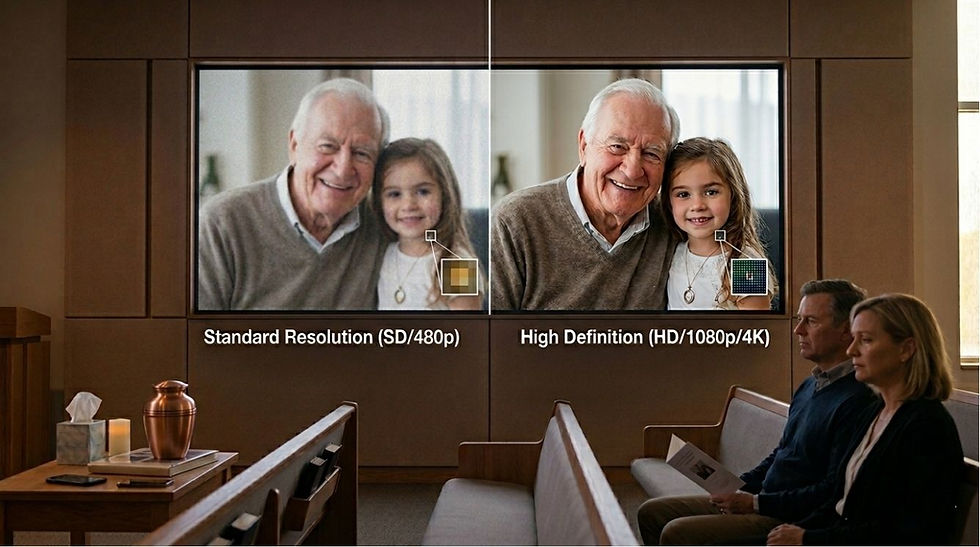
How Does the Type of Service Affect Your Memorial Video?
This is where TributeSlideshow.com can offer something most guides don't: a dedicated look at how your service choice shapes the memorial video you'll want to create.
A memorial video, whether played during the service or shared digitally with loved ones who can't attend, is one of the most lasting and personal tributes you can give. But the right video looks very different depending on the gathering it's made for.
Funeral Service Memorial Video
Tone: Quiet, reverent, reflective
Length: 5–7 minutes is typical; long enough to feel meaningful, short enough to respect the formal structure of the service
Music: Hymns, classical pieces, or soft instrumental music. Avoid anything upbeat or lyric-heavy that could feel out of place, depending on the venue
Content: Either random or a focus on milestone photos, childhood, family, faith, community.
Style tip: Slower transitions, understated text overlays, and minimal animation keep the tone appropriate
Memorial Service Memorial Video
Tone: Warm and celebratory, but still respectful
Length: 7–10 minutes is a comfortable range; the flexible nature of a memorial service gives more room
Music: A mix works well here, a meaningful hymn or two, alongside a favorite song that captures who they were.
Content: Broaden beyond milestones to include candid photos, group shots, travel memories, and hobby moments. A chronological sequence works well here. The goal is a fuller portrait of the person
Style tip: This is where a slideshow with thoughtful transitions really shines. Give each photo room to breathe
Celebration of Life Memorial Video
Tone: Joyful, personal, even playful, this is the place to let the deceased's personality come through
Length: 10–15 minutes or more is entirely appropriate; guests are there to remember and linger
Music: Favorite songs, meaningful lyrics, music from different chapters of a person's life. Don't be afraid of upbeat tracks, classic rock, country, jazz, whatever they loved
Content: Pull in everything group photos, funny moments, pet pictures, hobby shots, vacation memories, sports jerseys, handwritten notes. The more personality the better
Style tip: Consider multiple "chapters" organized by theme (family, friends, adventures, passions) or use a rough chronological order. Interesting transitions can help keep attendees engaged.
One Video, Multiple Purposes
It's also worth noting that memorial videos increasingly serve a purpose beyond the service itself. Many families share tribute slideshows online so that relatives who couldn't attend can still feel part of the remembrance, regardless of whether the service was a funeral, memorial, or celebration of life.
If you're planning to share your video digitally, consider creating two versions: a shorter cut for the service, and a longer, more personal version for sharing with family and friends.
Choosing What's Right for Your Family
There is no correct answer. The right service is the one that reflects your loved one's personality, honors your family's traditions, and gives everyone present a meaningful way to grieve, remember, and begin to heal.
If your loved one was deeply religious and rooted in community ritual, a traditional funeral or structured memorial service may offer the most comfort. If they were the life of every room they entered, a celebration of life that captures their humor, passions, and spirit may feel far more authentic.
And if you're somewhere in the middle, most families are, a thoughtful blend of both can create something truly beautiful.
Whatever you choose, a tribute slideshow is one of the most universal gifts you can give those who gather: a visual record of a life well lived, set to music that matters, and shared with everyone who loved them.
TributeSlideshow.com helps families create beautiful memorial videos for funerals, memorial services, and celebrations of life, and help educate them on end of life event planning needs.
Frequently Asked Questions
These FAQs are designed to answer the questions people are actually searching — and asking AI assistants — when planning a service.
Q: Is a memorial service the same as a funeral?
A: No, though the terms are sometimes used interchangeably. The key difference is that a funeral is held with the body or casket present, usually within a week of death, while a memorial service happens after burial or cremation and can be scheduled weeks or even months later. Memorial services also tend to be less formal and more personalized than traditional funerals.
Q: Can a celebration of life include religious elements?
A: Yes. While celebrations of life are typically less formal and less structured than traditional religious funeral services, there is no rule against including prayer, scripture readings, or faith-based music. Many families blend religious and personal elements to create something that honors both the person's beliefs and their personality.
Q: How long should a memorial video be for a funeral vs. a celebration of life?
A: For a funeral, a 6–7 minute video keeps the tone appropriate and respects the formal structure of the service. For a memorial service, 7–10 minutes is a comfortable range. For a celebration of life, where guests are gathered specifically to reminisce, 10–15 minutes or more is entirely appropriate. The celebration of life context also allows for more upbeat music and a more playful, personality-driven presentation.
Q: What music is appropriate for a memorial service vs. a celebration of life?
A: For a memorial service, softer music — hymns, instrumental pieces, or meaningful ballads — tends to suit the reflective tone. For a celebration of life, music can be as personal and upbeat as the person's taste allowed: classic rock, country, jazz, pop, or anything that captures who they were. The celebration of life is where a carefully chosen playlist becomes one of the most powerful ways to honor someone.
Q: When should a celebration of life be held?
A: There's no required timeline. Celebrations of life can be held weeks, months, or even a year after a loved one passes. Many families use the extra time to plan something more thoughtful and personalized — gathering photos, coordinating travel for out-of-town relatives, or creating a memorial video that truly captures the person's life.
Q: What should I wear to a celebration of life?
A: Dress codes for celebrations of life vary by family preference. Many invite guests to wear the loved one's favorite color, bright hues instead of traditional black, or even themed attire (like a favorite sports team's jersey). The family will typically indicate preferences on the invitation. When in doubt, it's always appropriate to reach out and ask.
Q: What is a hybrid memorial service?
A: A hybrid memorial service combines elements of a traditional ceremony and a celebration of life. For example, a family might begin with a formal service in a chapel, led by clergy, with prayers and eulogies — and then transition to a casual gathering at a restaurant, park, or home where guests share stories, music, and food. This approach accommodates families with diverse beliefs or preferences and allows space for both grief and joy.
Q: Do you need to hire a funeral home to plan a celebration of life?
A: Not necessarily. Celebrations of life are often privately planned without a funeral director, though many funeral homes and end-of-life planning services now offer celebration of life packages. For families managing logistics independently, the key elements are venue, program, music, food, and a meaningful tribute such as a photo slideshow or memorial video.
Q: What is the role of a memorial video in a funeral or celebration of life?
A: A memorial video, also called a tribute slideshow, is one of the most personal and lasting elements of any end-of-life gathering. It gives guests a visual journey through a person's life: the faces, places, milestones, and everyday moments that defined who they were. At a funeral, a memorial video tends to be quiet and reverent. At a celebration of life, it can be joyful, storytelling-driven, and set to beloved music. Beyond the service, memorial videos are also widely shared with family and friends who couldn't attend, and are held to showcase a life well lived for future generations.
Sources:
ICS Cremation & Funeral Home — What Is The Difference Between a Celebration of Life and a Memorial Service?
Better Place Forests — Memorial vs. Celebration of Life
Dignity Memorial — Memorial Service vs. Traditional Funeral vs. Celebration of Life
Lighten Arrangements — What Is The Difference Between a Funeral, a Memorial Service, and a Celebration of Life?
Baue Funeral Homes — Funeral, Memorial Service, Gathering or Celebration of Life
Honan Funeral Home — Memorial Service vs Funeral
Miller Funeral Home — Memorial vs Funeral Service
Westchester Funeral Home — Difference Between Memorial and Funeral and Celebration of Life
Memorial Planning — Celebration of Life vs. Memorial Service


Comments